I ran restaurants before I designed brands. That order matters.
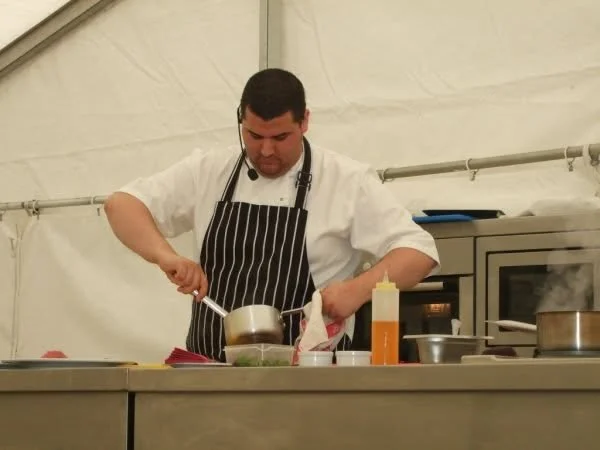
Most brand designers came up through design school, then an agency, then eventually out on their own. I came up through kitchens.
Fifteen years as a chef, working across award-winning restaurants, holding head chef and manager roles along the way, before I ever touched a client brief. Then I owned a restaurant of my own for three years, which earned recognition in the Michelin Guide. After that, I co-owned another for three years, again working as head chef and manager, and we kept that same recognition. Later, after closing both, I opened a Roman-style pizza shop and deli, a completely different price point and a completely different audience, before eventually selling that too.
None of that is design experience, not in the traditional sense. But it's exactly why I think about branding differently to a lot of people who do this for a living.
> The room did as much work as the food
Running your own restaurant teaches you things no design brief ever will. You learn what actually happens behind the pass when service goes wrong. You learn what it costs, in money and in nerves, to hold a standard every single night, not just on the nights someone's watching. And you learn, quickly and expensively if you don't already know it, that the food on the plate is only ever part of what someone's paying for.
Here's the honest version of that lesson: I wouldn't have been able to charge what I did for a meal if the premises had looked like a cafe.
The dish didn't change based on the room it left the kitchen into. But what someone was willing to pay for it changed completely, based on everything that surrounded it. The room. The way a table was set. The way the whole place carried itself before a single word was spoken or a single plate arrived. That's not decoration. That's positioning, made physical, and it was doing exactly as much work as anything happening in the kitchen.
> Not every brand needs the same room
The pizza shop I opened after the restaurants closed had nothing to do with fine dining. Different price point, different customer, different everything. But the same principle applied, just calibrated differently. A pizza shop doesn't need white tablecloths to earn trust, it needs its own version of the same thing: a look and feel that matches exactly what it's promising and exactly who it's for. Get that mismatch wrong in either direction, too polished for a casual audience or too casual for a premium one, and you lose people before they've tasted anything.
That's probably why I've never wanted to specialise in one type of business as a designer. Every industry has its own version of "the room," its own signals that tell a customer what to expect and what to pay. For La Dovecôte, a holiday let and B&B in Sarlat, that meant building the identity around the dove house already built into the property, and a warm, natural palette that told a guest what kind of stay to expect before they'd even arrived. Different business, different room, same principle, working out what that room needs to say before anyone's walked through the door.
> What that means for you
If you're starting out and your brand doesn't yet reflect what you're capable of, you're not imagining the effect that has. People decide what to expect from you, and what they're willing to pay, largely before you've said a word to them. I learned that running restaurants long before I learned it running a design studio. It's the whole reason I do this work the way I do it now.
If your business is at the stage where the room doesn't quite match what you're capable of yet, that's exactly where I start.